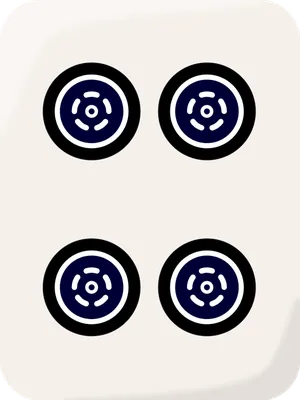
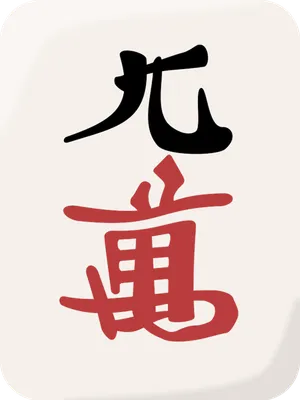
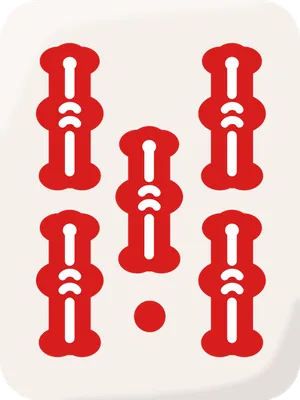
Dora are bonus tiles that give you extra han when you win. The more dora in your hand, the higher the score, but dora themselves are not a yaku. Therefore you cannot win with dora alone, and you must always have at least one separate yaku.
Riichi Mahjong has regular dora, red fives, ura dora, and kan dora. Each has different conditions for applying and different ways of checking, so it is good to learn to tell them apart.
The dora indicator is the tile that tells you what the actual dora is. The indicator itself does not become the dora; the tile after the indicator does.
For example, if the 3-man is the dora indicator, the 4-man is the dora. If the 9-man is shown, the numbers of that suit wrap around and the 1-man becomes the dora.
▲ Dora indicator

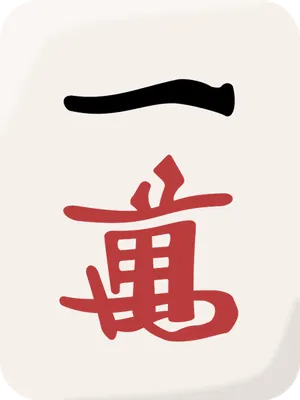
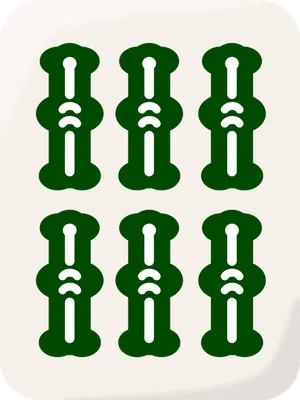
▲ The dora in this situation
This order applies independently to manzu, pinzu, and souzu. For example, if the 9-pin is shown, the 1-pin becomes the dora, and the 1 of another suit does not.
| Type | Dora indicator order |
|---|---|
| Wind tiles | East → South → West → North → East |
| Dragon tiles | White → Green → Red → White |
Wind tiles and dragon tiles each have their own separate cycle. For example, if West is the dora indicator, North is the dora, and if Green is shown, Red is the dora.

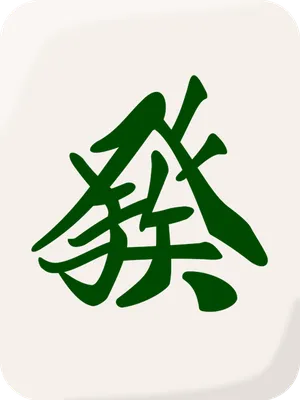
▲ Dora indicator

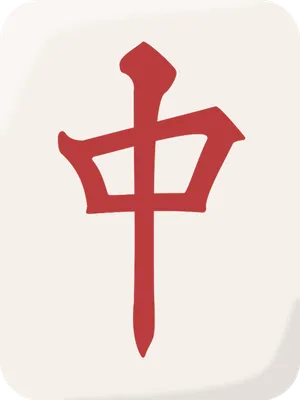
▲ The dora in this situation
Regular dora are the dora determined by the dora indicator revealed at the start of the game. Check the dora indicator in the dead wall of the wall, then look in your hand for the tile that comes next.
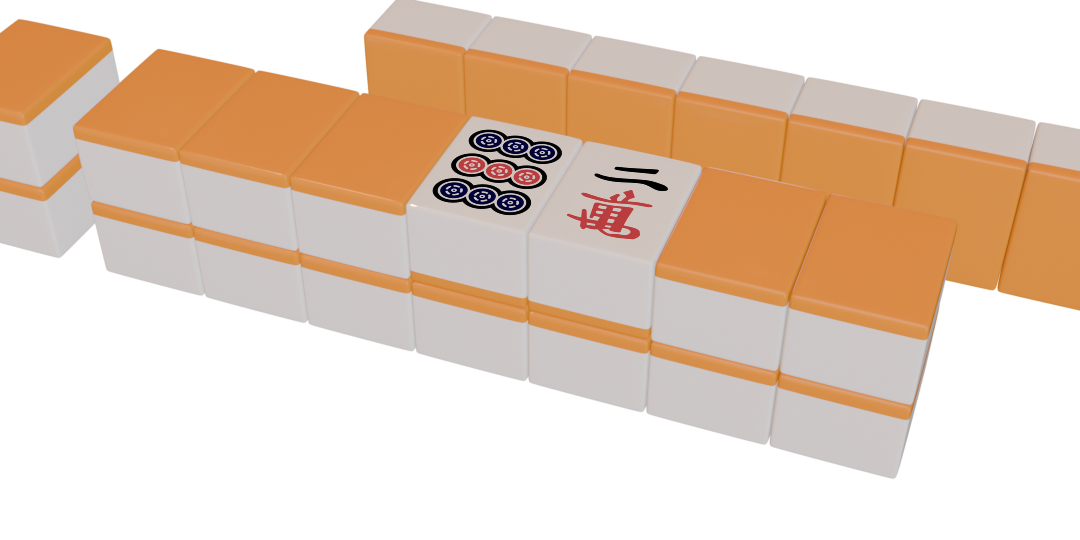
Regular dora count as 1 han for each matching tile in your hand. Two of the same dora are 2 han, and three are 3 han.
If a dora is included in your hand, your han go up regardless of whether your hand is closed. Dora inside a set revealed by a call are also counted.
For example, if the dora is the 5-pin (the dora indicator is the 4-pin) and the winning hand contains three 5-pin, you get 3 han from regular dora.
Red fives are number tiles of 5 marked in red. In standard 4-player Riichi Mahjong, the rule of including one red five each for the 5 of manzu, pinzu, and souzu is widely used.
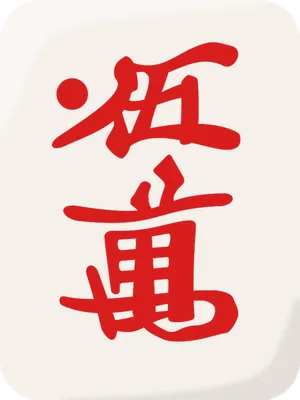

However, the number of red fives and whether they are used can vary depending on tournament or table rules. Some rules do not use red fives at all, or set a different number for each suit.
A red five is worth 1 han per tile. A regular dora and a red five can also apply at the same time.
For example, if the 5-pin is a red five and also happens to be the current regular dora, that single tile adds a total of 2 han: 1 han as a red five and 1 han as a regular dora.
Ura dora are additional dora you can check when you win after declaring riichi. An ura dora indicator is placed in the position behind each regular dora indicator, and when the player who declared riichi wins, the ura dora indicators beneath the currently face-up dora indicators are revealed.
▲ The current dora indicators are the 2-man and the 9-pin. If the player who declared riichi wins in this situation, the two tiles beneath those two dora indicators are flipped over to check the ura dora indicators.
Ura dora apply only when a player who declared riichi wins. If a player who did not declare riichi wins, the ura dora are neither revealed nor counted.
Ura dora are calculated in the same way as regular dora. The tile after the indicator becomes the ura dora, and if your hand contains several of that tile, your han go up by the number of tiles.
For example, if the ura dora indicator is the 4-sou, the 5-sou is the ura dora. If the winning hand contains two 5-sou, you get 2 han from ura dora.
Ura dora are a bonus you can gain when you win after riichi, so they are one of the factors that raise the expected value of riichi.
Kan dora are the dora determined by an additional dora indicator that is revealed when a kan is made. When a kan is declared, a new indicator is revealed in addition to the existing dora indicators, and the tile after that indicator becomes a new dora.
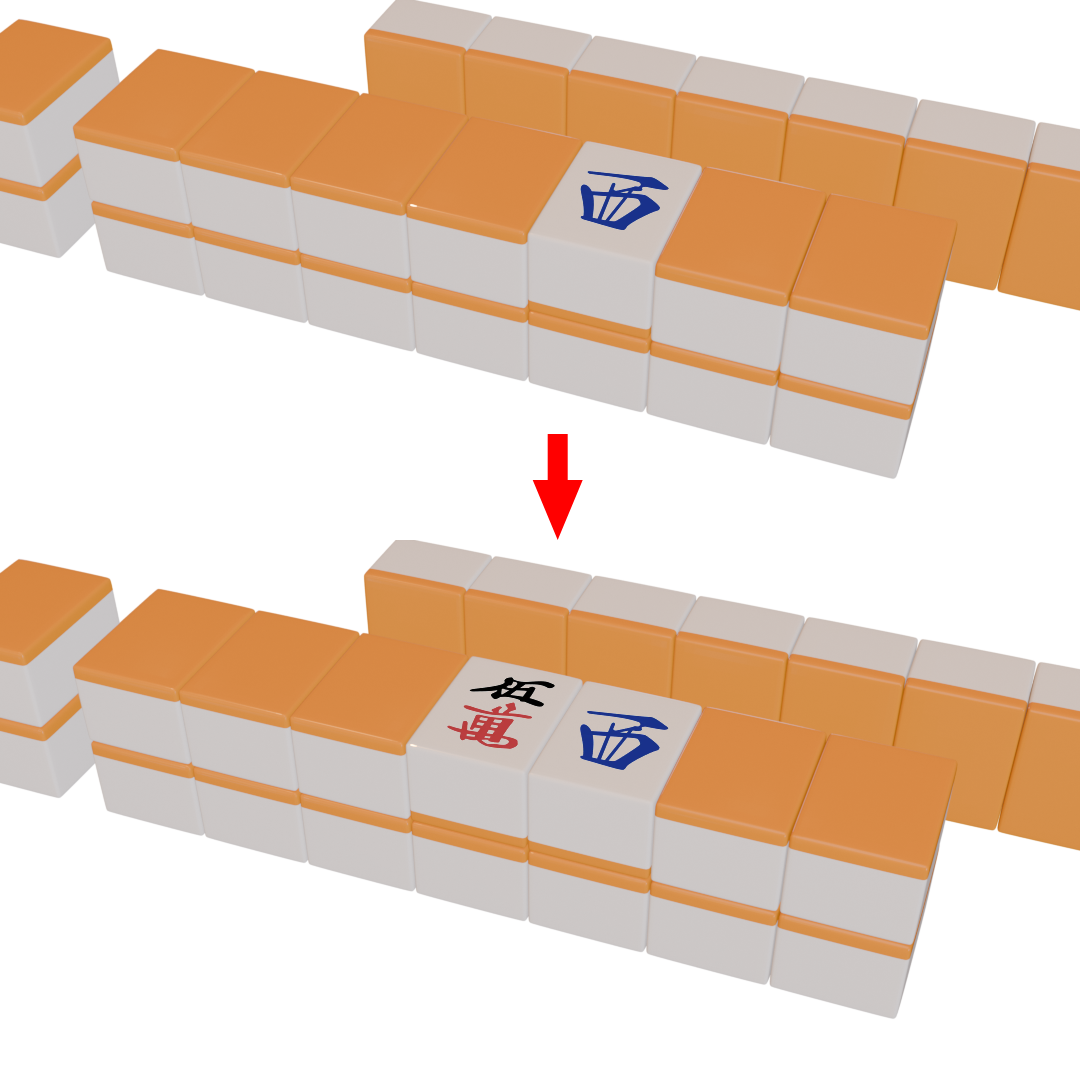
▲ After a player's kan declaration, a kan dora indicator, the 5-man, is revealed in addition to the original dora indicator, the West tile
Kan dora are calculated in the same way as regular dora. A dora is added each time a new indicator is revealed, so if your hand contains kan dora, your han go up by the number of those tiles.
The timing of when kan dora are revealed is explained in detail in the kan section of the Calls document.
If a player who declared riichi wins after kan dora have been revealed, they can also check the kan ura dora. Kan ura dora are the ura dora that correspond to the kan dora indicators.
Dora are calculated separately by type and then all added together. If you have tiles matching regular dora, red fives, ura dora, or kan dora, you add the han for each.
| Type | Han | Condition for revealing the dora indicator |
|---|---|---|
| Regular dora | 1 han per matching tile | One is revealed by default at the start of the round |
| Red five | 1 han per red five | - |
| Ura dora | 1 han per matching tile | When winning after riichi |
| Kan dora | 1 han per matching tile | When a player declares a kan |
| Kan ura dora | 1 han per matching tile | When winning after riichi, if there are kan dora |
Dora are calculated based on the entire winning hand. Not only the tiles remaining in your hand but also the tiles in sets revealed by pon or chii are counted. For a set made by kan, all four tiles are also counted.
Suppose the following situation.
The regular dora is the 5-pin, and you have two 5-pin in your hand. You also have one red 5-pin, and suppose that when you win after riichi, the ura dora is the 3-sou and you have one 3-sou.
| Type | Han |
|---|---|
| Two 5-pin as regular dora | 2 han |
| One red 5-pin | 1 han |
| One 3-sou as ura dora | 1 han |
| Total | 4 han |
In this case, you get a total of 4 han from dora. You then add the han gained from riichi or other yaku to calculate the final han.
Dora and yaku both affect the final han, but there is an important difference in the conditions for winning.
A yaku is a condition required to win, while dora are a bonus that raises the score when you win. Therefore, no matter how many dora you have, you cannot win without at least one yaku.
| Category | Yaku | Dora |
|---|---|---|
| Condition for winning | At least one is required | You can win without them |
| Han Calculation | Each yaku has its own fixed han | 1 han per matching tile |
| Examples | Riichi, Pinfu, All Simples | Regular dora, red fives, ura dora |
For example, even if you have four dora in your hand, you cannot win without a yaku. Conversely, if you have the yaku Riichi, you can win even without any dora.
Dora are calculated regardless of whether your hand is closed. Therefore, if a hand opened by a call through chii or pon contains dora, you can still get the corresponding han.