
In Riichi Mahjong, fu are a scoring element determined by the shape of the winning hand, the wait, the way of winning, and so on. Together with han they determine the final winning score, and generally, even with the same han, higher fu mean a higher score.
Fu are calculated for every win, but for yaku with fixed fu such as Seven Pairs, or when the scoring system for Mangan or above applies, the standard fu calculation is not used as is.
To calculate fu, you add fu for the way of winning, the types of sets, the pair, and the wait shape to the base fu, and then round up to the nearest 10 fu.
Standard fu calculation proceeds in the following order.
For example, if the result is 32 fu, it is rounded up to 40 fu. 40 fu stays as 40 fu.
A standard win is given 20 fu by default. Fu for the way of winning are added on top of this.
| Item | Fu | Description |
|---|---|---|
| Base fu | 20 fu | Applied by default to a standard win. |
| Closed ron | +10 fu | Added when you win by ron with a closed hand. |
| Tsumo | +2 fu | Added when you win by tsumo. |
| Pinfu tsumo | +0 fu | As an exception, Pinfu tsumo does not add the 2 fu for tsumo. |
Sets are divided into sequences, triplets, and quads. Fu depend on the type of set, whether it is open or concealed, and whether the tiles used are simples or terminals and honors.
Terminals and honors means the 1s and 9s of the number suits and the honor tiles. The number tiles from 2 to 8 are simples.
| Set | Simples | Terminals and honors |
|---|---|---|
| Open triplet | 2 fu | 4 fu |
| Concealed triplet | 4 fu | 8 fu |
| Open kan | 8 fu | 16 fu |
| Concealed kan | 16 fu | 32 fu |
Sequences give no fu. Only triplets and quads add fu according to the table above.
A concealed triplet is a triplet you completed yourself without taking another player's tile. An open triplet is a triplet that was revealed through pon, ron, or the like. Concealed kans and open kans are distinguished by the same principle.
When you win by ron on a shanpon wait, the triplet completed by ron is treated as an open triplet. Therefore, even if a pair that was originally in your hand becomes a triplet, you cannot receive the fu of a concealed triplet.
On the other hand, if you win by tsumo, that triplet is recognized as a concealed triplet. This difference can also affect whether Three Concealed Triplets or Four Concealed Triplets is established.
If the pair is a certain yakuhai, you get additional fu. Yakuhai means dragon tiles and seat wind tiles and prevalent wind tiles.
| Type of pair | Fu |
|---|---|
| Regular number tile | 0 fu |
| Honor tile that is not yakuhai | 0 fu |
| Dragon tiles | 2 fu |
| Seat wind tile | 2 fu |
| Prevalent wind tile | 2 fu |
| Both seat wind tile and prevalent wind tile | 4 fu |
If the pair is a dragon tile, a seat wind tile, or a prevalent wind tile, add 2 fu for each.
When the seat wind tile and the prevalent wind tile are the same, that is, when a double wind is used as the pair, 4 fu are recognized.
Fu differ depending on the shape of the wait for the winning tile. Kanchan, penchan, and tanki waits each add 2 fu.
| Wait shape | Fu | Examples |
|---|---|---|
| Ryanmen | 0 fu | Holding 2-3 and waiting on 1 or 4 |
| Kanchan | 2 fu | Holding 2-4 and waiting on 3 |
| Penchan | 2 fu | Holding 1-2 and waiting on 3 |
| Tanki | 2 fu | Holding a single 6 and waiting on 6 |
| Shanpon | 0 fu | Holding 7-7-9-9 and waiting on 7 or 9 |
The wait shape is judged by which set or pair the winning tile actually completes. When one winning tile can be interpreted in several ways, it is common to apply the interpretation that gives the highest score first.
Pinfu is a yaku in which all four sets are sequences, the pair is not yakuhai, and you win on a ryanmen wait. As an exception, Pinfu tsumo recognizes only the base 20 fu and does not add the 2 fu for tsumo.
Therefore, Pinfu tsumo is calculated as 20 fu.
Seven Pairs has fu fixed at 25 fu. The standard fu calculation and rounding up to the nearest 10 fu do not apply.
Seven Pairs is a closed-only yaku, and whether you win by tsumo or by ron, it is calculated as 25 fu. No other fu items are added.
Except in cases where fu are set as an exception, such as Seven Pairs and Pinfu tsumo, the fu total is rounded up to the nearest 10 fu.
| Calculation result | Final fu |
|---|---|
| 20 fu | 20 fu |
| 22 fu | 30 fu |
| 30 fu | 30 fu |
| 32 fu | 40 fu |
| 40 fu | 40 fu |
| 42 fu | 50 fu |
+
Ron
Suppose you won by ron with a closed hand and no additional fu arose from the sets, the pair, or the wait.
| Item | Fu |
|---|---|
| Base fu | 20 fu |
| Closed ron | 10 fu |
| Total | 30 fu |
The final fu are 30 fu.

+
Tsumo
Suppose you won by tsumo with an open hand and have one open triplet of simples and a kanchan wait.
| Item | Fu |
|---|---|
| Base fu | 20 fu |
| Tsumo | 2 fu |
| Open triplet of simples | 2 fu |
| Kanchan wait | 2 fu |
| Total | 26 fu |
26 fu is rounded up to the nearest 10 fu, giving a final 30 fu.


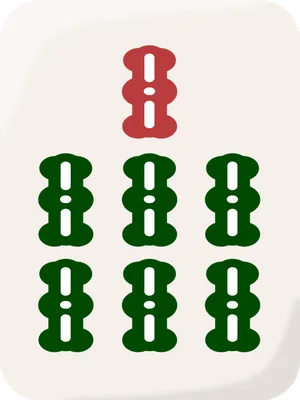

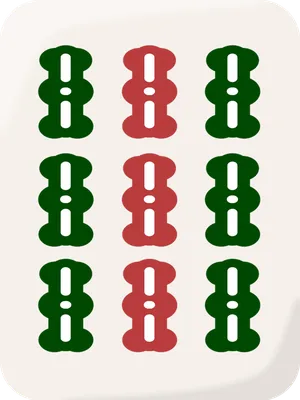
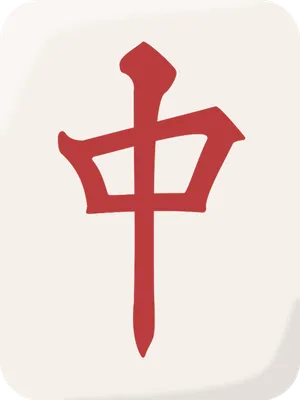
+
Ron
Suppose you won by ron with a closed hand and have one concealed triplet of terminals or honors and a tanki wait.
| Item | Fu |
|---|---|
| Base fu | 20 fu |
| Closed ron | 10 fu |
| Concealed triplet of terminals or honors | 8 fu |
| Tanki wait | 2 fu |
| Total | 40 fu |
The total is exactly 40 fu, so the final fu are 40 fu.
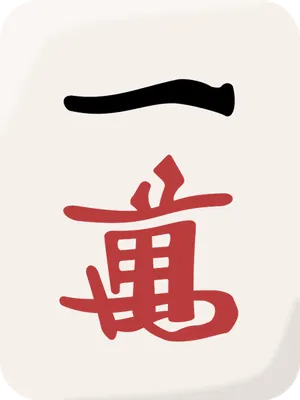


+
Tsumo
If you win with Seven Pairs, the fu are fixed at 25 fu without calculating any other items.
| Item | Fu |
|---|---|
| Seven Pairs fixed fu | 25 fu |
| Final fu | 25 fu |